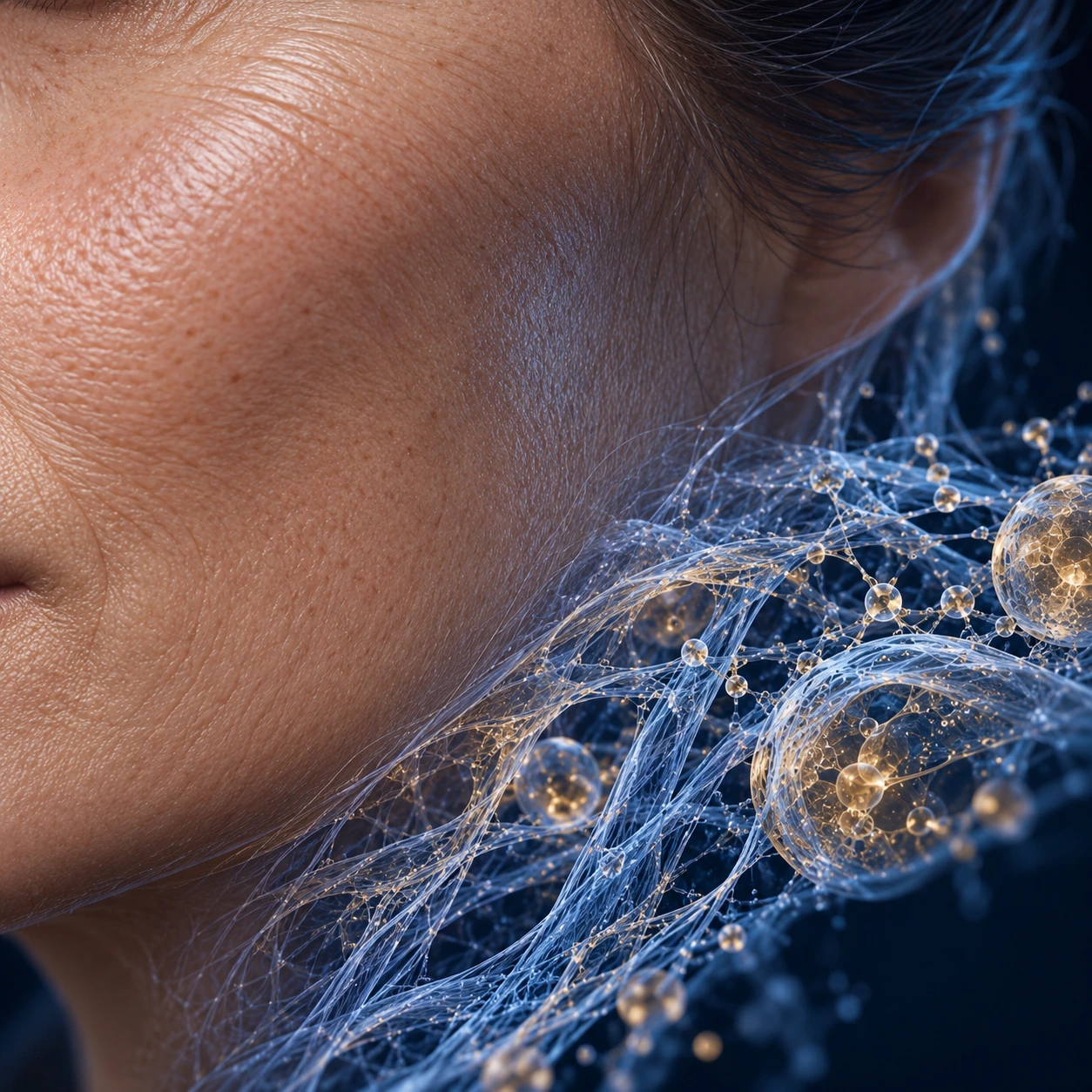
Cell communication
Vesicles and soluble factors participate in communication between cells.

APPLICATIONS / DERMATOLOGY & AESTHETICS
The science and clinical use of the preparation in skin quality, photoageing and aesthetic dermatology.
THE TISSUE & THE PREPARATION
Fibroblasts, extracellular matrix, vascular signalling and cell communication all contribute to the skin’s response. Hydration, pigmentation, surface features and dermal structure each require specific assessment.
Our approach keeps platelet-associated signals with vesicles, soluble mediators, carrier proteins and matrix-forming components from the patient’s plasma. The clinical handbook covers patient assessment, preparation, treatment planning, aftercare and follow-up.
Vesicles and soluble factors participate in communication between cells.
Carrier proteins influence signal availability; matrix components contribute to the tissue environment.
Photography, skin-quality measures and ultrasound can track different aspects of the response.
CLINICAL FOCUS
Face, neck and décolletage, with attention to fine lines, surface features and the patient’s priorities.
Dedicated teaching considers the condition, skin phenotype, treatment history and the place of combination care.
Assessment, procedural planning, aftercare and consistent photography are covered together in the clinical handbook.
EXOSMART OBSERVATIONAL SERIES · 10 PATIENTS · 12 MONTHS
In Dr Montse Ponga Manso’s prospective series, 10 patients received one treatment and were followed by ultrasound. Mean subepidermal low-echogenic band thickness changed from 0.143 mm at baseline to 0.049 mm at one year. This single-arm series used 60 mL blood, approximately 20 mL plasma and approximately 8 mL output. The handbook presents the ultrasound findings and follow-up.
ASSESSMENT & FOLLOW-UP
The intervals below are educational follow-up guidance, not the schedule of a specific study. Record a baseline and adapt follow-up to the condition, procedure and patient. Refer to the specialty handbook for treatment planning.
Agree the skin-quality objective and record standardised baseline images.
Review the selected skin measures after the early procedural effects settle.
Compare skin-quality measures with baseline and discuss the patient’s priorities.
Plan further treatment around the documented response and remaining target.
What to record Photography · skin quality · hydration · ultrasound
PROFESSIONAL EDUCATION
EXOSMART ACADEMY · OCTOBER 2026
Biology, clinical evidence, assessment and follow-up for dermatology.
Written by Mihail Blagoev, co-founder of exosmart and Global Regenerative Group. Use the companion Evidence Compendium for study detail and the Pocket Card for a concise clinical reference.
Read the handbook All dermatology resourcesYOUR PRACTICE
Contact us for device preparation training, scientific documentation and education for your specialty.